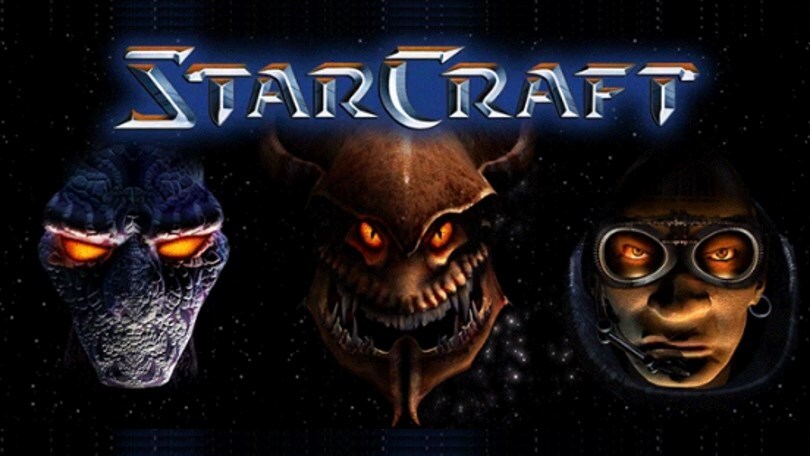
I like to consider myself fairly good at video games. I can beat a From Software title with minimal controller smashing. I’ve finished one or two levels in Super Meat Boy. Baldur’s Gate 1 only killed me seventy-six times. I’ve even thrown hands with Mike Tyson in Punch Out a few times. I’m basically a god.
But you know what I’m really bad at? Real-time strategy games. Which is a bit odd, given that I’ve been playing them since I was a kid. Although to be fair, I never was one for the strategy part. I’d just build a visually appealing base, get a big army of every unit I liked, then smash them into the enemy and hope for the best.
Mock me all you want. I might not be a Napoleon, but I at least had fun.
Once upon a time, RTS games dominated the market. Games like Age of Empires, Command & Conquer, Warcraft, so on and so forth. Even big franchises like Star Wars and Lord of the Rings wanted a slice of that pie.

Me? My game of choice was always Starcraft. Namely SCII. At the time I discovered the series, Blizzard wasn’t selling the original in any official capacity. I played a few matches at a friend’s house one time, but that’s the extent of my experience with the original.
Lucky for me, they remastered the game a few years ago. Now, at long last, I can experience the roots of my favorite RTS series! Today, at long last, I’m taking a look into Starcraft 1!
*Important note: this review will focus solely on the single-player campaigns. Namely because gameplay wise, they’re basically the same. My only real notes on multiplayer would be, “Boy, I sure got eaten alive in there,” or, “I couldn’t get a decent match at all.”
The plot of Starcraft is divided between six campaigns, each focusing on one of the three playable factions. There are the original three stories, then the Brood War expansion. Each one comes packed with eight to ten missions. In short: you’ll get plenty of bang for your buck.
For the summary, we’ll be focusing on the original three. Although the Brood War campaigns are way better in terms of story and gameplay. But if I talked about all six of them, I’d be here all day.
In the Terran campaign, you play as an Executor for the Confederacy overseeing a dinky little fringe world. Here, you meet Jim Raynor, a sheriff with a heart of gold, as well as one of the other factions: the Zerg. When the Zerg infestation grows out of control, the Confederacy abandons the planet, leaving you and all your men for dead. Luckily, Arcturus Mengsk, Sarah Kerrigan, and their rebels, the Sons of Korhal, arrive to help you and Jim out. Under your command, you take on the Zerg and Confederacy alike to establish a new “better” Terran government.
In the Zerg campaign, you play as a Cerebrate, one of the commanders of the Zerg Swarm beneath the host, the Overmind. With command of the Zerg, you need to fight off Terrans and the highly advanced Protoss in order to further establish the Swarm’s dominance across the galaxy, as well as to prepare the Overmind’s new ultimate weapon: the Queen of Blades. Your ultimate aim: the invasion of the Protoss homeworld, Aiur.
In the Protoss campaign, you play as an Executor working beneath the leaders of Aiur, the Enclave. With the Zerg arriving on the Protoss homeworld, it’s up to you to mount the defenses and drive off the Swarm. In order to do so, however, you must go against the Enclave and go against the traditions of Protoss society.

While all three of these stories are mostly separate, they are told chronologically. Events from the Terran campaign have effect in the Zerg campaign, and the Zerg on the Protoss. You’ll even occasionally see the characters from the other campaigns pop up as allies or enemies, such as when Raynor teams up with the Protoss or when Kerrigan tries to kill Zeratul.
Different as all the campaigns are, they have one thing in common: betrayal. It doesn’t matter if you’re a space redneck, a space bug, or whatever the hell the Protoss are supposed to be. Everyone stabs each other in the back. It makes for a pretty intriguing sci-fi drama; you never know who is priming to stab whom and when.
Safe bet: if Kerrigan is involved in literally any shape or form, someone is getting betrayed. By which I mean everyone.
For the most part, the game’s story is told at you rather than to you. Characters will directly address you, telling you what to do and what’s going on. Larger events are told via paragraphs of text rather than flashy visuals. It’s almost like the game is a TTRPG, or a really cool sci-fi book.
*Starting in Brood War, the game starts to use in-game cutscenes to communicate the story. And they’re pretty cool! Although they do slow the pace of the missions down.
There’s also a lot of cinematic cutscenes. Which have aged like milk. The early 3D models are definitely products of the time, and their stiff animations are stiff and robotic. Even so, I love ’em; it takes me right back to my childhood, when this was considered exceptional.
While they definitely look dated, the actual cutscenes are still great! They’re a perfect blend of sci-fi horror, epic set pieces, and hilarious space redneck shenanigans. They don’t always directly add to the story, but they do add to the universe. Old as they are, they’re still full to the brim with personality; they’re a ton of fun to watch! Especially the opening cinematic to Brood War!
On the subject of dated visuals: this is one of the few games where I prefer the Remastered graphics to the original. While I love older looking games, the original Starcraft visuals hurt my eyes. Besides, the Remastered graphics give you a wider field of view. Pretty important for a strategy game. Still, being able to switch between old and new with a button press is always a nice feature.
*There’s also an extra graphical style you could get for an extra few bucks to make the game look like CarbotAnimations. It’s a surprisingly good texture pack that gives the game a little bit of cutesy fun flare.
With all that aside, let’s talk about the actual game. If you’ve played an RTS, you know what to expect. Gather resources, build structures, amass an army, crush the enemy. Simple stuff.
Each of three factions plays their own way. Terrans have decently strong units and mobile structures, allowing them to relocate their base for strategic maneuvering or emergency escapes. Zerg units are weaker, but production costs are lower, so you can amass an army real quick. Protoss units and structures are expensive, powerful, and need to be built within range of a Pylon to function. While they’re all different and require different strategies and skills, the basics are all easy to wrap your mind around.
Time, alas, is not on this game’s side. Two critical aspects of Starcraft have aged like milk. As a result, playing this game in current year can be an absolute nightmare.
The first problem is control groups. You’ll need a decently sized army to defeat your enemies, but you can only control twelve units at a time. Meaning if you’re mounting a large assault, you need to constantly swap between your control groups and move carefully, otherwise they’ll all line up like a centipede to be annihilated one at a time. It’s annoying, sure, but you learn to live with it pretty quickly.
The second, significantly larger problem is the AI. Holy shit, your units are stupid! Tell them to go left, they’re gonna go right! If you need to go up a ramp, not even God can save you! What good is an army when every soldier in it has the same sense of direction as this guy?!

Starcraft 1 is a fun game. There are some really cool missions, especially in the Brood War campaigns! But when I have to constantly wrestle with the game to get my army to do what it’s supposed to, I stop having fun and start punching my keyboard. RTS games need to feel responsive, and this is anything but!
Still, I tried my best not to let that spoil the levels. Because they’re still great! Excluding tutorials, the campaign missions are all fairly open-ended in how you approach them. They hand you a list of objectives to fulfill under certain criteria, but how you actually go about it is almost entirely up to you. If you’ve got the time and the resources, you can build just about whatever kind of army you want. It’s a blast!
Except the no-build missions. Normally, I like these a lot in RTS games. Here? I can’t stand them! They all take place in the same god damn ship, and some of them throw one-hit kill enemies at you that can wipe out your whole platoon, hero unit included. Your first time through, they’re largely gonna be trial, error, and reloading while you put your strategy together. If you can’t build something, this game is not fun.
I wanted to love Starcraft 1. I really did! The story was really interesting, most of the levels are cool and fun, and the core gameplay loop of gathering resources and building a base is always a blast! Everything I enjoy about these games is present and accounted for!
No matter how good the game, however, I can’t enjoy it if I can barely even control it. The AI pathing problem was just too damn frustrating for me to deal with. If you’re a more patient person than me, you’ll likely have a blast with this one; it’s still a damn good RTS game! Personally, though, I doubt I’ll be revisiting this one anytime soon. If at all.
God, I hate ending reviews on negative notes. I never know how to wrap up. Uh…
Yeah, I got nothing. Bye.
 Jonah's Books & Rants
Leave a comment