The yuan-ti cast off their humanity long ago, and with it, their sanity.
From Masters of the Forbidden City by Codo Vidak
Lore: Slithering Tyrants
Dwelling within abandoned temples buried within jungles, swamps, and deserts, the yuan-ti plot to supplant the dominant races of the world and become gods. Once, they were humans who worshipped serpents as totem animals, who philosophized the virtues of a calm, focused mind clear of emotion. They were among the richest civilizations in the world, expanding their mighty metropolises with their mightier warriors and praying to their serpent gods.
One day, those gods heard those prayers and answered. The yuan-ti religion soon became cult-like, with its members indulging in all the dark whims of their gods, such as cannibalism and humanoid sacrifice. Through twisted magics, they even bred with snakes, taking forms closer to their gods.
While the rest of the world views this transformation as their fall, the yuan-ti see it as their ascension. Those of their kind that didn’t change were quickly enslaved or made into food. Many who opposed their cannibalistic ways rose up against them, and the one mighty empires fell into ruin.
Emotions and sentiment are considered weakness among the yuan-ti. They view the world with pragmatism so extreme that controlling it non-magically is nigh impossible. Despite this, they themselves often employ manipulative techniques, controlling lesser races through fear, awe, or even pleasure. They understand the world cannot be controlled by force, so they are cunning. Everything they do moves them further towards their grand design.
The lives of the yuna-ti revolve around their faith. Yet they don’t love their gods; rather, they see them as a means to attain further power. They believe one who rises high enough can devour the gods and subsequently replace them. No atrocity is too horrific if it means achieving their goal.
At the top of the yuan-ti are the abominations, as they are the closest in appearance to their snake gods. Malisons, half-men half-snakes, serve as the middle class. Beneath them all is the pureblood, the closest in resemblance to humans; they serve as spies of the yuan-ti empire, hiding in plain sight within humanoid settlements.
Design: Three Dissssstinct Flavorssssss
It has been 0 days since Jonah made a terrible joke during Best of the Bestiary.
And here, we have the snake, the mostly-snake, and the not-so-snake. Scalies are gonna have a field day with this one.
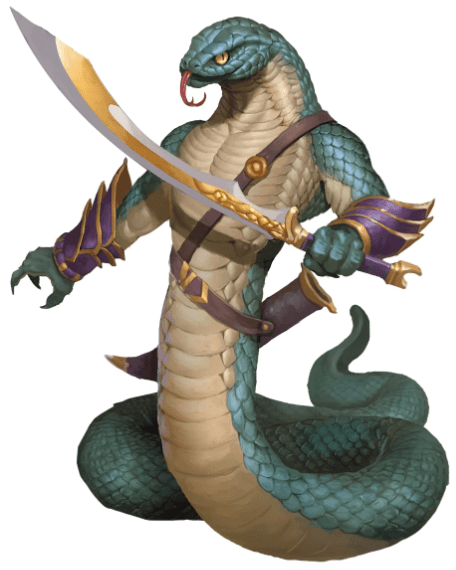
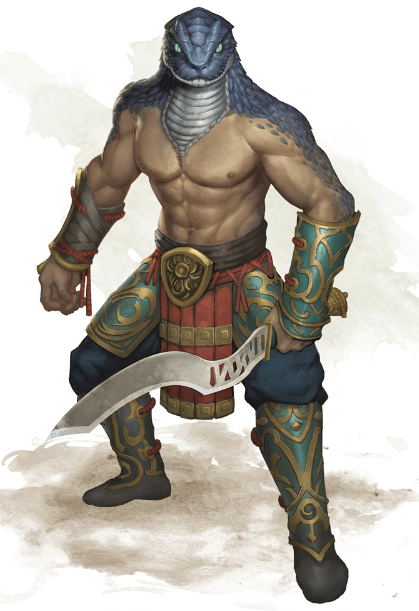
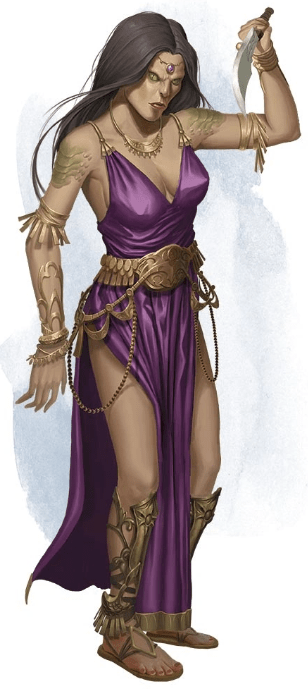
I like how the lore is reflected in their designs. The most snake-like creature stands at the top, with the most humanoid at the bottom. Sure, it does this with all the subtlety of a brick to the face. But it gets the job done and does it well!
Besides that, you can tell their rank and role just by looking at them. The abomination has a cunning look, and their gear is clearly high-ranking. The malison is more of a soldier, with simple and efficient equipment. Finally, the pureblood wields a knife and wears light clothing, both necessary for a sneaky assassin.
Honestly, I’m impressed. They took the concept of ‘snake-person’ and made it something creative, interesting, and cool. It isn’t as bizarre or grotesque as the monsters higher on the list, but it’s still a damn good one!
Now, that seems enough for today. I’ll see y’all next week to see how these guys fight!


 Jonah's Books & Rants
Leave a reply to sopantooth Cancel reply